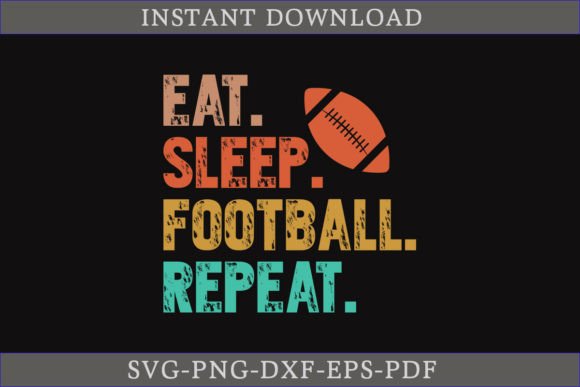
Eat Sleep Football Repeat SVG: A Designer’s Review
As a designer who spends half my life digitizing patterns and the other half stitching them out, I have learned to look past the glossy mockups. When I first opened the Eat Sleep Football Repeat SVG T-shirt file, I wasn’t just looking for a cute graphic. I was looking for structural integrity. In the world of machine embroidery, a design is only as good as its performance on fabric. This review breaks down how this specific asset holds up when moved from the screen to the hoop, focusing on practical application for craft business owners and serious hobbyists.
First Impressions and Visual Personality
The immediate mood of this design is energetic yet familiar. The "Eat Sleep Football Repeat" motif taps into a universal language for sports enthusiasts, but the execution determines its value. Visually, the layout feels balanced. It avoids the cluttered look that plagues many free or low-cost graphics found online. The typography appears bold enough to withstand the expansion that happens during stitching, which is a critical detail often overlooked by beginners.
For those of us in the Crafts sector, clarity is currency. If the lines are too thin or the shapes too complex, the final product looks messy. This design seems to prioritize clean lines, suggesting it would translate well into a satin stitch or a tight fill stitch depending on the size. It feels like a design meant for visibility, not subtlety, making it ideal for items where you want the message to be read from across the room.
Real-World Application: The Custom Sweatshirt Test
To truly evaluate a machine embroidery design, you have to imagine it on a difficult surface. I mentally placed this design on a heavyweight cotton blend sweatshirt, a staple for any Etsy seller during the fall season. The theme fits perfectly here. Parents love buying matching family gear for game days, and this slogan captures that spirit.
However, the real test is how it handles the texture. Sweatshirts have a nap. If the stitch density is too low, the fabric shows through, ruining the contrast. If it is too high, the garment becomes stiff and uncomfortable. Based on the visual weight of the SVG elements, this design appears robust enough to cover the fabric texture without requiring an excessive amount of thread, which helps keep production costs down for small shop products.
Versatility Across Product Lines
Beyond apparel, this asset has legs in other categories. Consider a canvas tote bag design. The sturdy nature of canvas pairs well with bold graphics. You could also scale it down for a personalized embroidered patch to iron onto a denim jacket. For baby embroidery, you might need to simplify the text or increase the size significantly to ensure the small details don’t get lost in the stitching process. It is a versatile digital embroidery file that can serve multiple niches within a craft business.
Technical Considerations for Embroiderers
Before you load this into your machine, there are practical steps to take. The product description notes that you receive a zip file containing SVG, DXF, EPS, PNG, and PDF formats. It is crucial to understand that SVG and DXF are vector-based, while PNG is raster. For embroidery software, you will likely be importing the vector files to auto-digitize or using them as a reference for manual digitizing if you are adjusting the pathing.
Check the stitch type: If you are converting this yourself, pay attention to the lettering. Thin fonts often break under tension. Ensure you are using a appropriate stabilizer—a cut-away stabilizer is usually best for stretchy fabrics like t-shirts to prevent puckering. A tear-away might suffice for stable woven fabrics like aprons or pillow covers.
Hoop size matters: While the design looks compact, always measure the total width and height in your software before hooping. If you are working on a curved surface like a cap, you may need to split the design or use a specialized cap frame to avoid distortion. The "Repeat" element suggests a cyclical nature, so ensure the spacing between words allows for proper stitch connection without thread jumps that could snag.
Where to Use Caution
No design is perfect for every scenario. I would advise caution when using this on dark, textured fabrics if you do not have high-contrast thread colors. White thread on black fleece can look striking, but any misalignment is glaringly obvious. Additionally, avoid placing this design over seams or zippers. The rigid structure of the text does not bend well around irregularities.
For commercial embroidery projects involving frequent washing, such as gym bags or kids' sportswear, ensure your underlay stitches are sufficient. The top stitches provide the beauty, but the underlay provides the longevity. If the design feels too light in your preview, add a zigzag or edge-walk underlay to anchor it firmly to the fabric.
Enhancing Brand Value and Customer Trust
Using high-quality assets like Eat Sleep Football Repeat SVG T-shirt directly impacts your brand perception. Customers can tell the difference between a crisp, professional stitch-out and a messy, amateur attempt. When you deliver a personalized gift or a custom apparel item that looks polished, you build trust. This leads to repeat buyers and positive reviews, which are the lifeblood of any small shop product line.
Furthermore, having a reliable design asset allows you to create consistent printable mockup images for your online store. Consistency in your visual presentation helps customers recognize your style. Whether you are selling holiday embroidery gifts or year-round sports gear, the professionalism of your source files reflects in your finished product.
Final Verdict for Designers
The Eat Sleep Football Repeat SVG T-shirt design is a solid addition to a designer’s library, provided it is used with technical awareness. It offers a clear, bold aesthetic that works well for sports-themed merchandise. Remember to always test on scrap fabric first. Check your hoop size, confirm your thread colors provide enough contrast, and verify the licensing terms if you plan to sell the handmade product commercially. While the file formats provided (SVG, DXF, EPS, PNG, PDF) offer flexibility, the responsibility for proper digitization and stitch optimization lies with the user. Treat this file as a strong foundation, not a finished solution, and you will create items that customers love to wear and display.